
The Mission
From a mattress in Mexico to the Oval Office.
At least twenty-two veterans a day take their own lives. I came close to being one of them. This is the whole story.
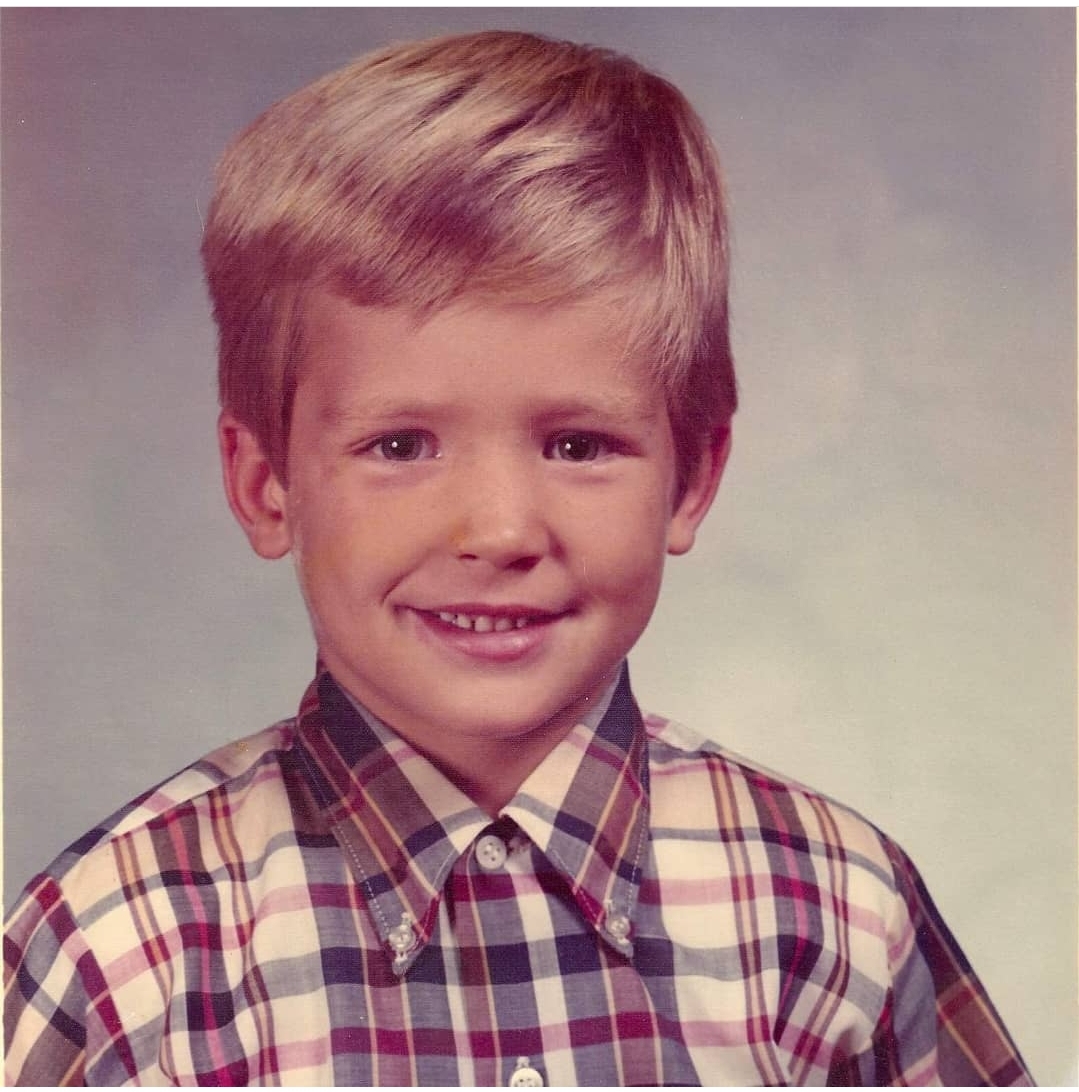
South Jersey
Before Any Of It
I was an altar boy.
One of six kids. Irish Catholic, South Jersey and South Philadelphia. Lower middle class. Mass every Sunday, and nobody asked why.
The parish priest came for dinner. Before he left, all eight of us went down on our knees in the living room while he blessed the house and everyone in it.
The God I was handed back then was an old man on a throne in the clouds. Watching. Keeping score. And you had better not make Him angry.
I never questioned it. It wasn't a conclusion I'd reached — it was simply the floor everything else was standing on.
We were a close, happy, God-fearing family.
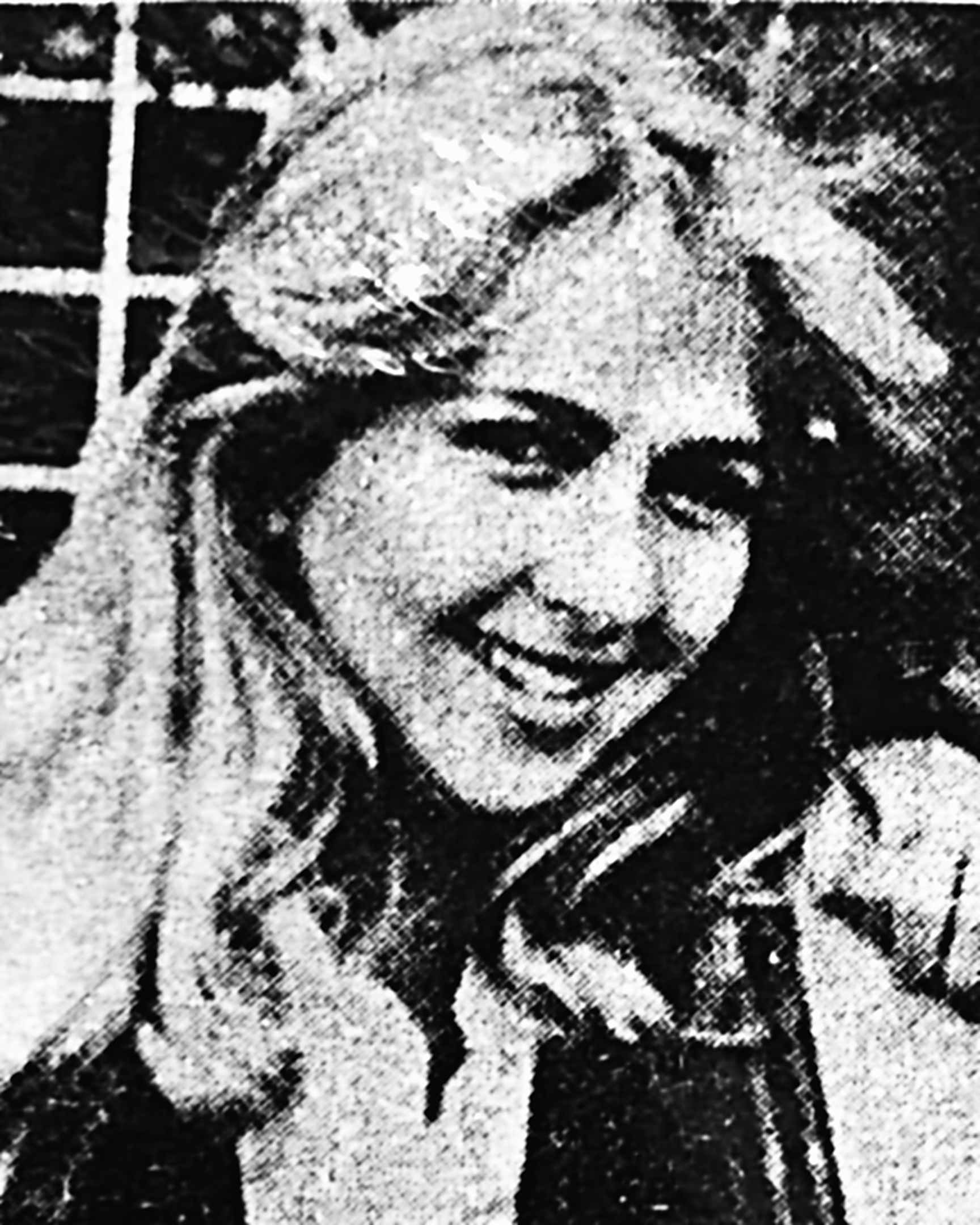
Monica
Nineteen Years Old
Then a drunk driver killed my sister.
Two of my sisters and my brother were at Villanova. Monica was nineteen. She was killed by a drunk driver on the way home from a fraternity party. I was a teenager.
I lost my parents that night too. They kept breathing. My dad went to work. My mom did everything she could to hold us together. But the people in that house afterward were not the people who had been in it before, and they never were again.
My father died years later. My mother and my siblings say he died of a broken heart.
And I knew exactly who to blame. Not the man behind the wheel. God. He took her, He broke my mother and my father, and He did it to a family that never missed a Sunday. That was the arithmetic I did as a kid, sitting in the same church I'd served in. I carried it for forty years.
One drunk driver. Two graves. And a kid who learned that you survive a thing by putting it somewhere and never opening it again.
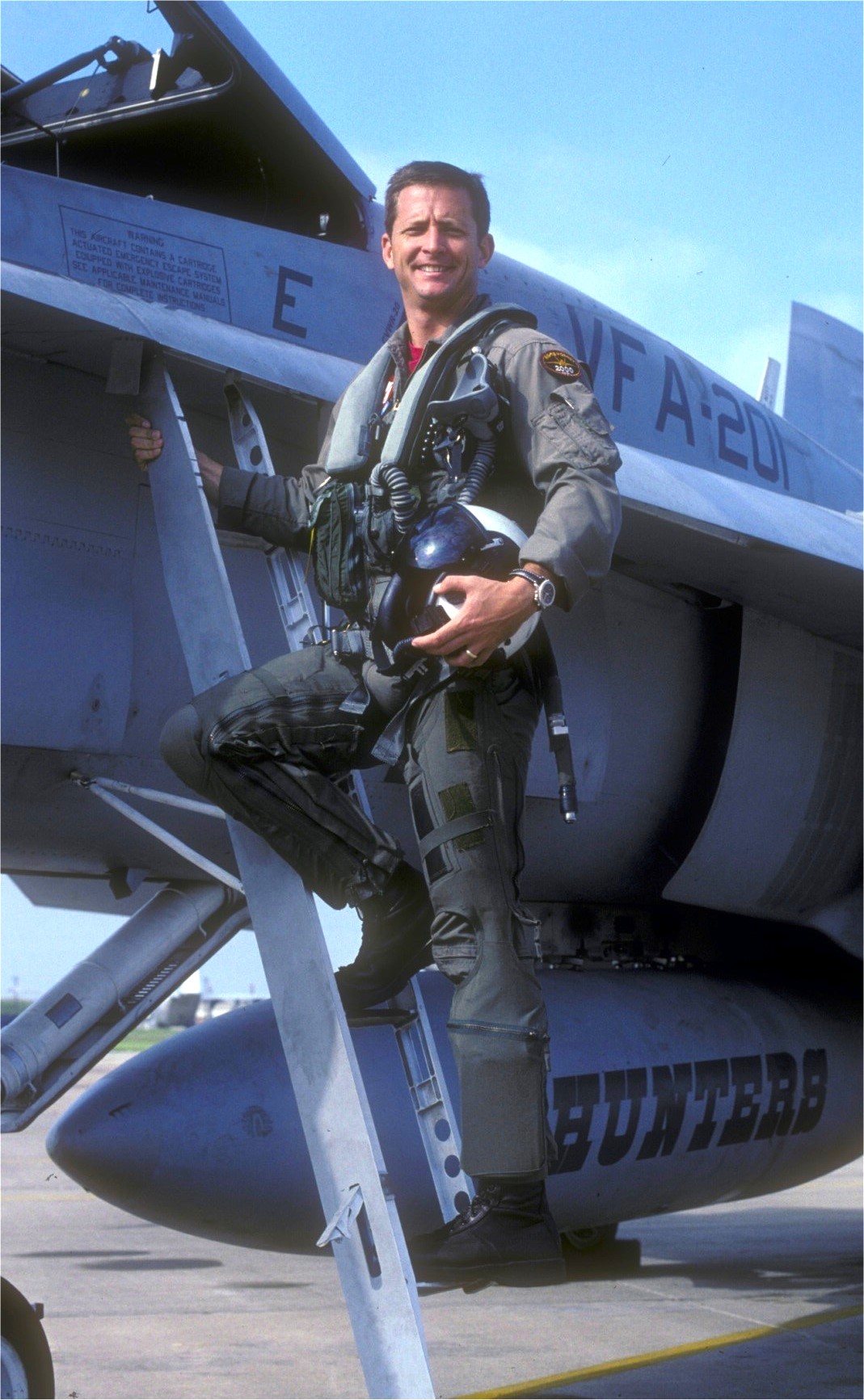
Strike Fighter Squadron 201 (VFA-201)
Naval Air Station Fort Worth, TX
Fifteen Years Flying Fighters
I carried all of it into the cockpit.
I am a survivor of childhood sexual abuse. That, and Monica, went with me into fifteen years of flying fighters.
The Navy gave me somewhere better to put it. Fighter aviation runs on compartmentalization — you take the thing that's eating you, you put it in a box, you stow the box, and you go fly. That isn't a coping mechanism I invented. I'd been doing it since I was thirteen. The Navy just made it doctrine. You cannot be thinking about your dead sister on the ball at three in the morning.
So I got very good at not thinking about it. And for a long time, it worked.
Sixteen aviator brothers and sisters lost in mishaps.
Not one of them in combat.
Four of my F/A-18 squadronmates, by their own hand.
The culture had a phrase for how we carried that. Tonight we drink, tomorrow we die. Exhaustion was normal. Drinking was normal. Pushing through anything was the whole identity, and nobody was going to be the first man to say he couldn't.
And then there's the part nobody talks about, including me, for most of my life. Flying fighters doesn't only punish your mind. It is a sustained physical assault.
Every landing on a carrier deck is a controlled crash. You fly twenty tons of airplane into steel at full power and let a cable stop you in under two seconds. I did that over and over for years. Every single one of them hit my body like a car wreck — because that's what it is.
And in between, thousands of hours of pulling Gs at the edge of consciousness. Vision greying out at the corners. Spine compressing. A helmet and a mask loading a neck that was never built to carry it. The human body is not designed to do this, and it does not forget that you made it.
I didn't connect any of it until decades later. You don't, at the time. At the time it's just the job, and the job is the best thing that ever happened to you.
Nobody debriefs the body. It keeps its own log, and it never loses it.
Somewhere in those years, without ever deciding to, I stopped believing in God. There was no moment. He was still the old man on the throne, and I had already decided what He'd done to my family, so I simply stopped showing up. It would be decades before I found out how wrong I was.
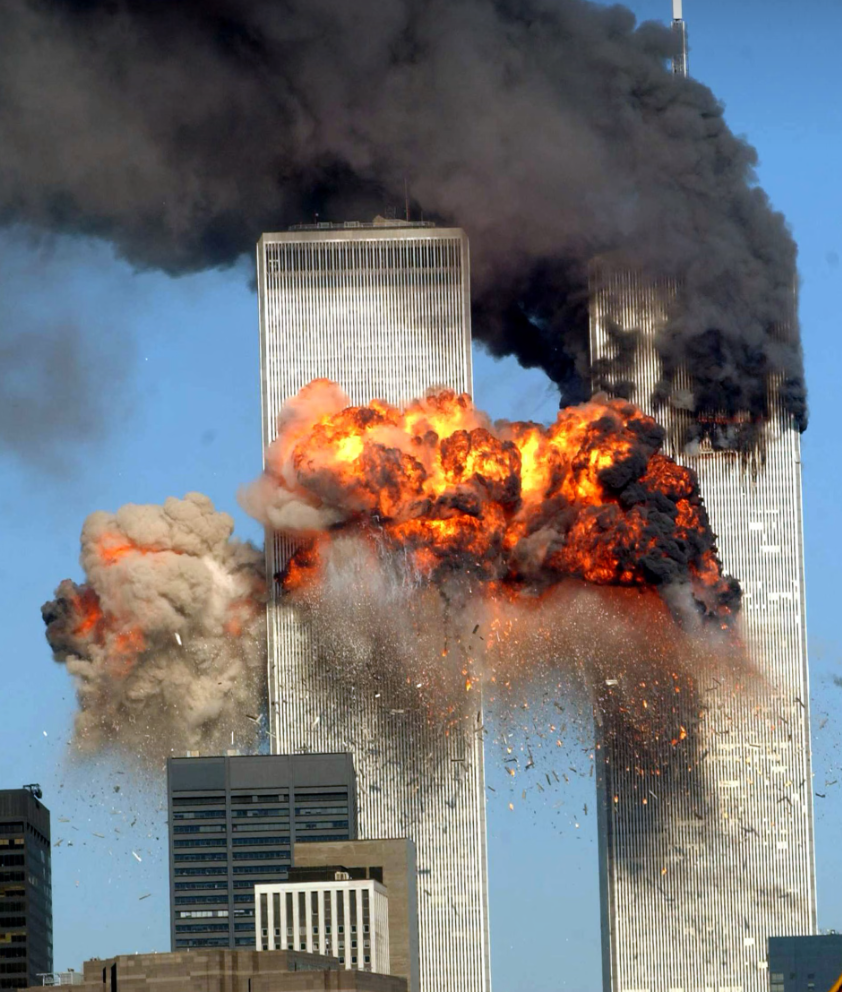
September 11, 2001
September 11, 2001
I was supposed to fly for American that morning.
I'd just been hired by American Airlines. September eleventh was scheduled to be my first flight.
When the second plane hit, I knew we were under attack.
I raced out to Naval Air Station Fort Worth, where I flew in the reserve with the Hunters of Strike Fighter Squadron 201, and manned a combat air patrol alongside the F-16 squadron next door.
In the space of a single morning I went from being scheduled to fly an airliner to being airborne and armed with orders to shoot one down.
And understand who was in those cockpits. Almost every pilot in my reserve squadron also flew for the airlines. Most of them were in the air that morning — at work, in the left seat, with a couple hundred Americans sitting behind them.
The airliner I might be ordered to destroy could have been flown by one of my best friends.
A week later, American furloughed me.
I had a family, no job, and a box in my head I had no intention of opening.
So I went back to the only other thing I knew how to do well.
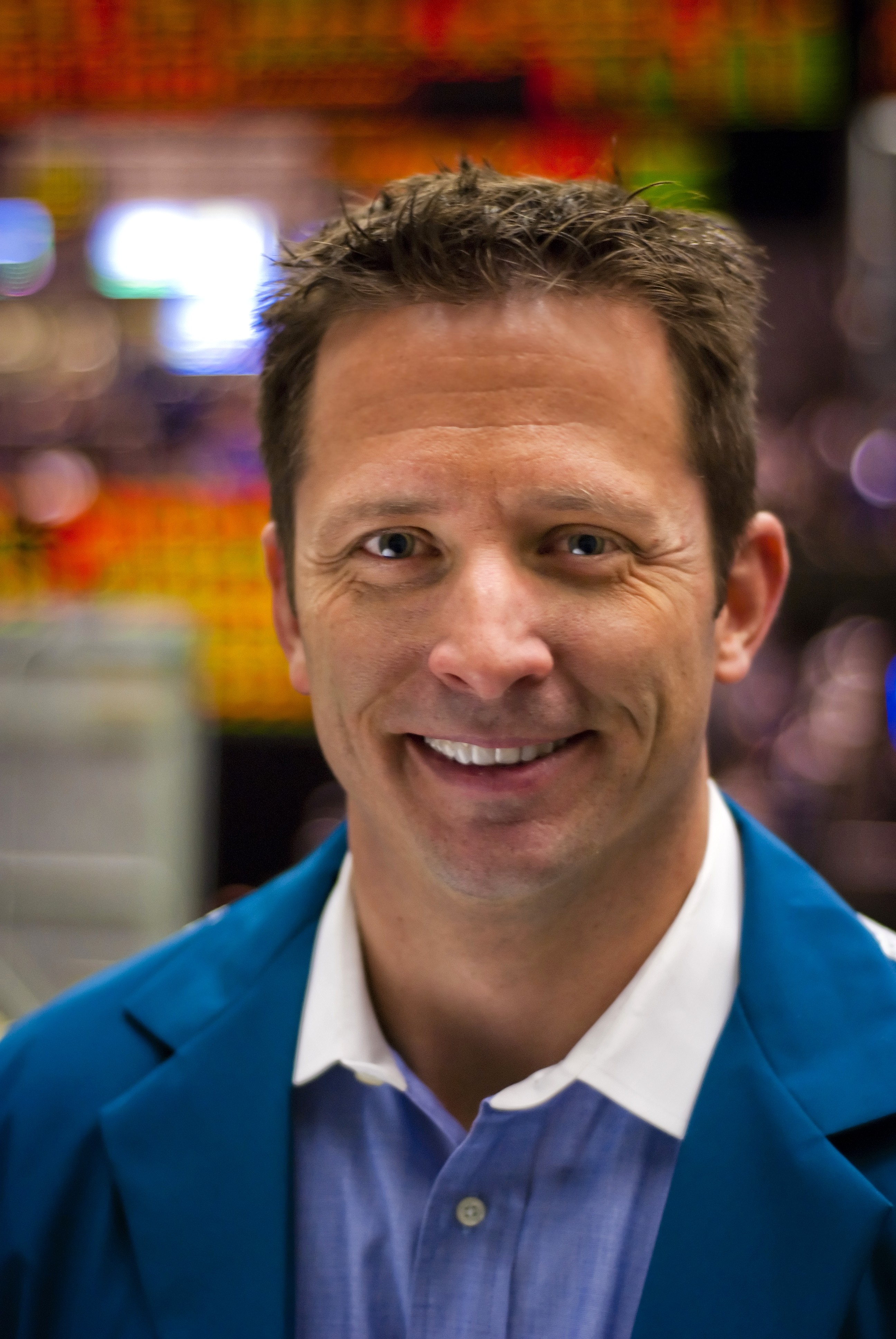
Chicago Board of Trade. I look like a man with everything figured out.
Two Worlds
Two weeks flying fighters. Then back to the trading floor.
The furlough took the airline job. It didn't take the thing I'd taught myself on active duty.
In the downtime between workups and deployments, I taught myself to trade stocks and options. No mentor, no desk, nobody to tell me what I didn't know. I learned fast, because in my world a mistake gets you killed — and I brought that same attitude to my money. I got good at it, for reasons that had nothing to do with finance.
Trading is a form of combat. Somebody wins and somebody loses.
You need a strategy. You need tactics that support the strategy. You manage risk before you execute, and you plan your contingencies before things go wrong — not while they're going wrong. Everything that kept me alive over Iraq made me money in the market. Same discipline. Different arena.
Wall Street noticed. Managing Director of Strategy at a multi-billion dollar volatility arbitrage options firm in the Chicago Board of Trade building. Then CEO of a financial media company that went head to head with CNBC.
And the whole time, I was living in two worlds at once.
I was still flying with my reserve squadron. I'd disappear for a week or two at a stretch flying Red Air — playing the adversary against active-duty squadrons working up to deploy. My job was to be the enemy, so that when they met the real one they'd already know what it looked like.
Single-seat fighter. Nobody sitting beside me. But every name on that flight schedule was someone I trusted with my life, because a fighter squadron doesn't keep the other kind — not for long. Then I'd fly back to Chicago and walk onto the trading floor, where I wouldn't trust the guy at the next desk to watch my wallet for five minutes while I went to the bathroom.
In one world, trust was required to wear the uniform. In the other, it was a weakness to be priced in.
I was very good at the second one. It paid extraordinarily well. And every year of it moved me further from my God, my beautiful bride, my family, and any mission worth the name.
So I left. Moved to South Florida and started TOPGUN Options.
The best job I ever had in the Navy was instructor. Teaching a young aviator to see the fight before it happens — to fly the airplane instead of riding it. So I built the company I wish I'd had when I was teaching myself with nobody to ask: a place where investors at any skill level get taught how to fight Wall Street and win.
From the outside, that looks like a man building a career. From the inside, it was a man who had found somewhere new to put it.
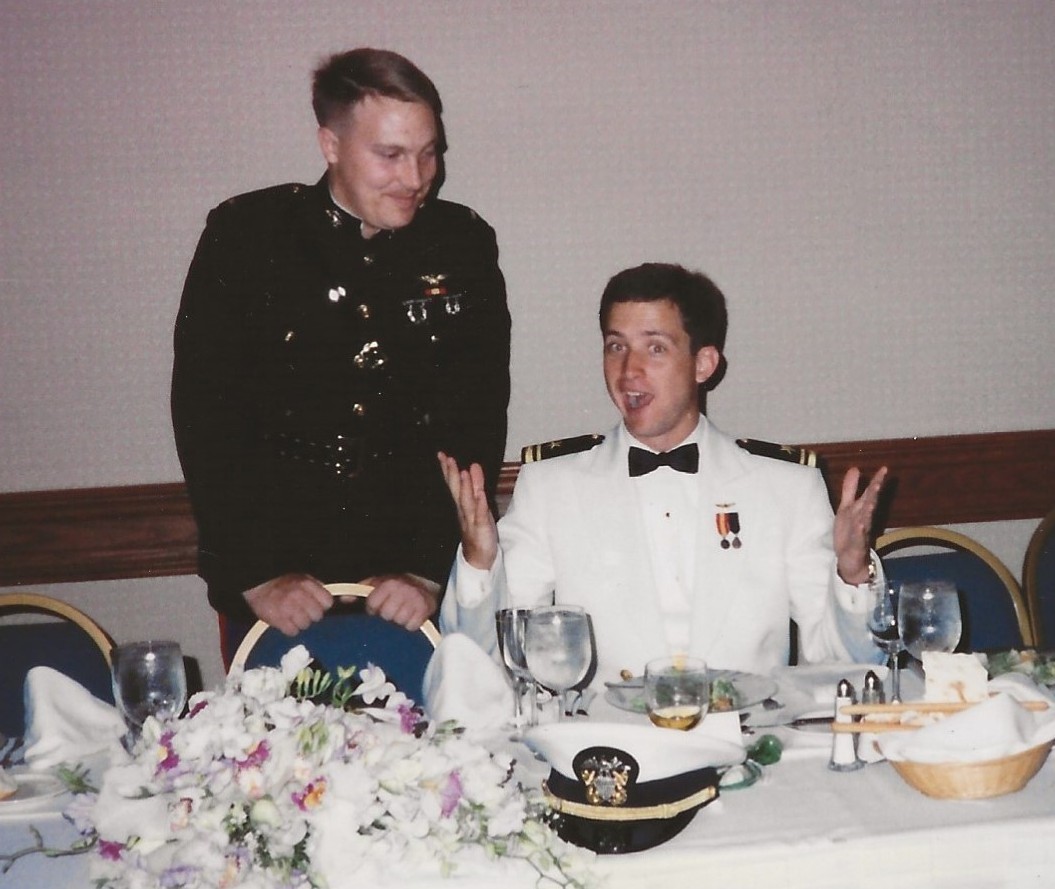
Eric “Swede” Swenson and me
at my wedding
The One That Started It
Then Swede took his own life.
Eric “Swede” Swenson and I were in the same squadron in flight school. We got our wings, I went to a Navy fleet squadron and he went Marine Corps, F/A-18s, and we stayed best friends the whole way. He was close with my wife Suzi too. He was a groomsman in our wedding.
And then he was gone, by his own hand, and there was no warning I had been able to read.
He was one of the four.
I looked at Suzi and said: we have to do something about veteran suicide.
Then I walked into my office, stood in front of a whiteboard, and discovered I had absolutely nothing.
Help them pay the rent?
Write a resume?
Buy them a suit?
I had flown combat sorties over Iraq. I had run strategy at a Wall Street firm. I had built a company and sold it. Give me a target, a threat picture and a timeline and I will build you a plan. And I could not answer the only question that mattered: how do you keep a man from killing himself?
I want to be precise about that, because it's the part people skip when they tell this story back to me. I wasn't humbled. I was useless. Every tool I owned was built for problems that stay solved, and this was not one of those.
And then another veteran told me what a few guys had started doing.
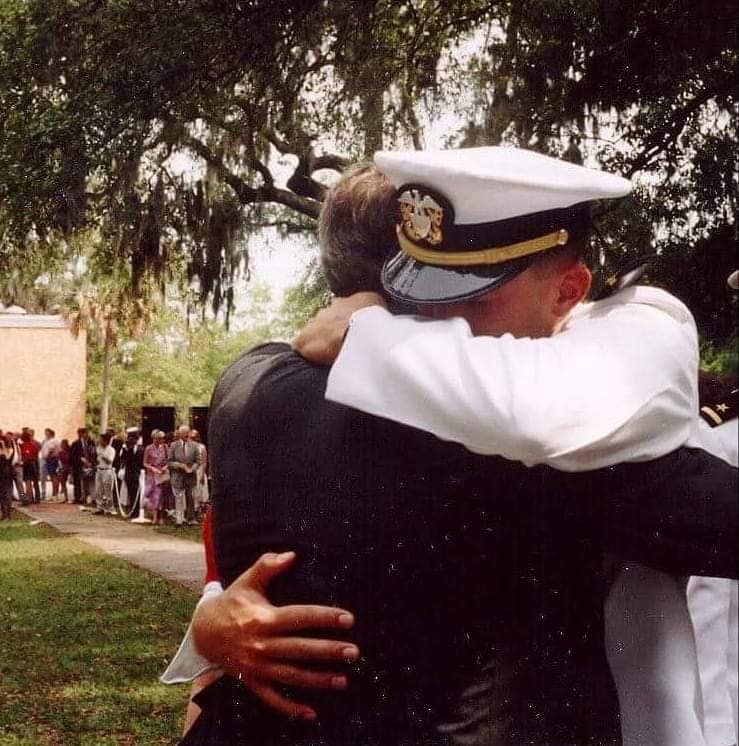
My father and me
Commissioning, April 27, 1991
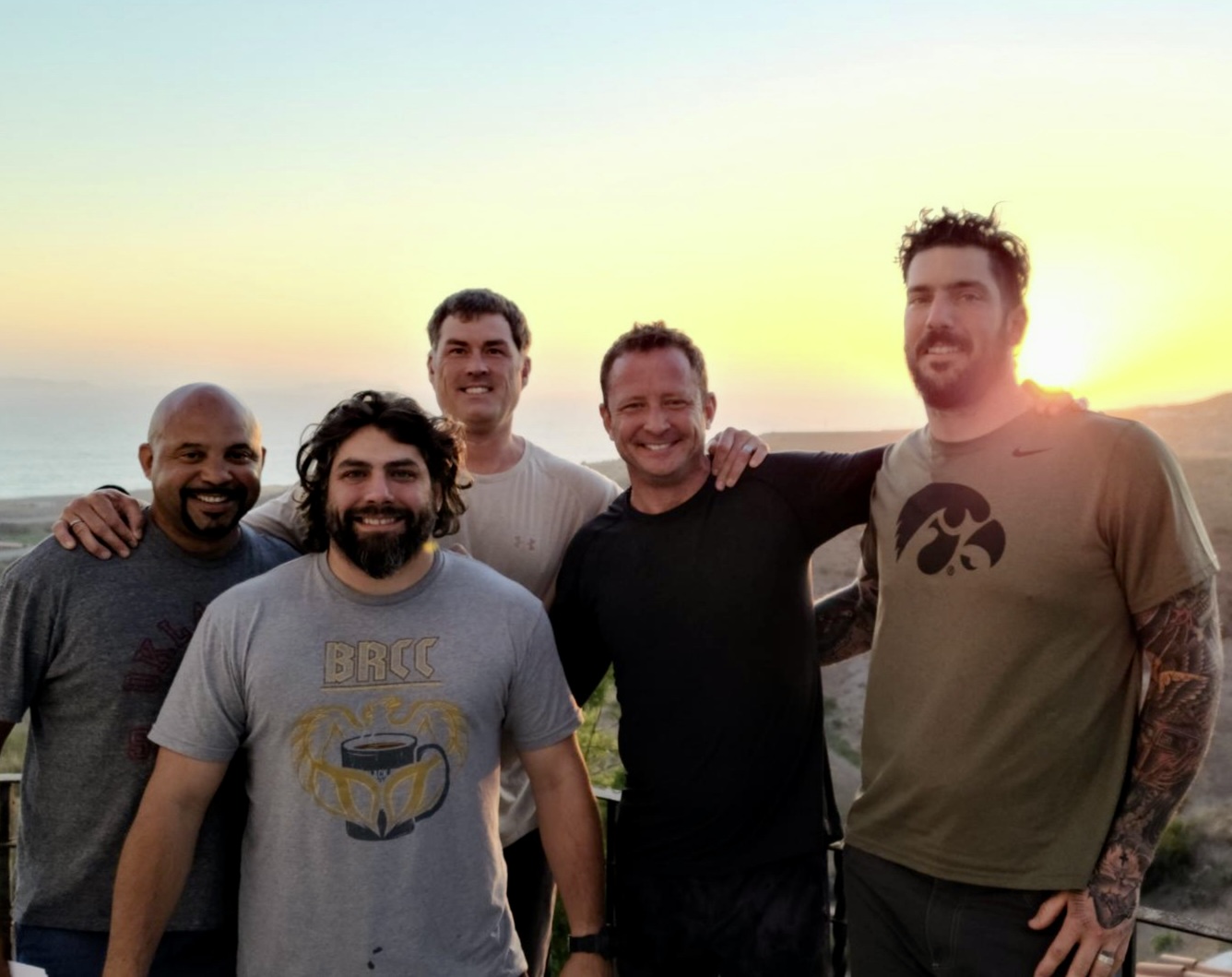
Mexico, May 2021
May 2021
A mattress in Mexico.
Special Forces guys. Navy SEALs. Men who had done things in uniform that most Americans will never hear about, quietly going to Mexico because what they needed wasn't legal here.
In May of 2021, I went down with four other men.
Marcus Luttrell, the Navy SEAL from Lone Survivor. His SEAL teammate John Jones. Jarred Taylor, a TACP, and one of the founders of Black Rifle Coffee. And Robert Gallery — All-American out of Iowa, College Football Hall of Fame, years on the line for the Raiders, and a head carrying the damage to prove it.
You don't fly to Mexico. You fly into San Diego. A couple of cars meet you, and a small caravan drives you south across the border.
An hour. That is the entire distance. North of that line, what I was about to do would have made me a criminal. South of it, in a clinic overlooking the Pacific, it gave me my life back.
Ibogaine, then 5-MeO-DMT. Medically supervised, in a clinic. And then a mattress on the floor and nowhere left to hide.
Forty years of things I had put in boxes and stowed came out of those boxes all at once.
And then I met God.
Not the old man on the throne in the clouds. Not the one keeping score, waiting on me to slip. That God had never existed. I had spent my whole life terrified of something I'd been handed as a child, and furious at it for taking my sister.
What met me was love. Light. Energy. Compassion. It came to me directly, with nothing standing in between, and it wanted nothing from me at all.
So I asked the question I had been carrying since I was a teenager. Why Monica. Why so young.
I know. Trust me.
That was it. Not an explanation. Not a reason. And I trusted it — and I was healed.
And I sat with Monica. And I sat with my father.
I lost my faith for over forty years. I reconnected with my sister, my dad, and my God.
I'm not going to oversell this. It is not a miracle and it is not for everyone.
And be precise about the medicine, because the differences matter. Ibogaine belongs in a clinic. It carries real cardiac risk, it demands screening and monitoring, and it should only ever be done under medical supervision by people who know exactly what they are doing. That isn't a disclaimer. I'll argue it with anyone.
Psilocybin is a different matter. It has a far safer profile, it doesn't require that clinical apparatus, and it's why it's the sacrament we use in fellowship.
There's a phrase I have never once used about myself. I'm going to use it here, and only here.
I was born again.
Not as a slogan. As a description. I was handed a clean sheet of paper and told to write the next chapter.
Suzi had spent years married to a man who was leaving a little at a time without ever going anywhere. Neither of us had words for it then. She had her husband back before I finished telling her why.
Since that weekend I have been a better father and a better human being than I knew how to be before. And alcohol — which had been in my life since the ready room — was simply gone. I didn't fight it. It left.
I went down there a man who had run out of road. I came home with my life back, and with the answer to the question I couldn't answer at that whiteboard.
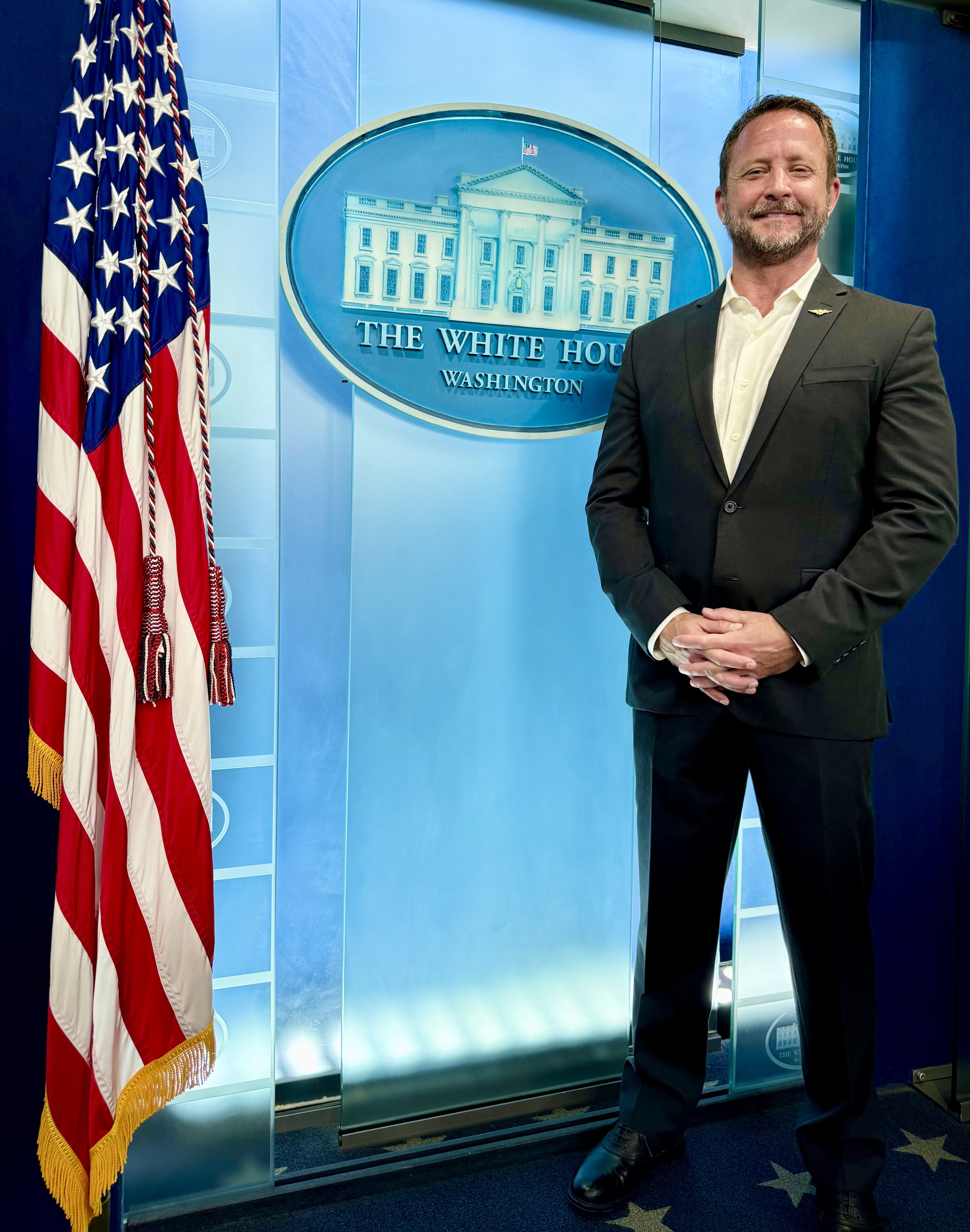
The White House
April 2026
No Fallen Heroes Foundation
I came home and built the thing I couldn't draw on that whiteboard.
The answer was never a resume or a suit. The answer was access — getting veterans to treatment that works, in a country that still won't let them have it.
So I stood up the No Fallen Heroes Foundation and ran it the way I'd run anything with lives riding on it. Not as a charity. As a mission with one measurable objective: keep people alive. Find them, fund them, get them there, and stay with them afterward.
More than 300 veterans, first responders and family
members funded to treatment.
Zero suicides. Zero adverse events.
I don't put that number up to impress anybody. I put it up because this country has spent billions on veteran suicide and the number hasn't moved.
And the official number is almost certainly low. The VA says twenty-two a day. A study by America's Warrior Partnership with Duke University and the University of Alabama put it at at least forty-four — once you count the overdoses that get written off as accidents.
One suicide is a hand grenade. It's a generational hand grenade.
It doesn't stop with the person. It goes through the spouse, the kids, the parents, the squadron, and it keeps going. Which is why saving one life isn't saving one life. It's breaking a chain that would have run for generations.
People started listening. I ended up at the Department of Veterans Affairs, in front of Secretary Collins, who looked me dead in the eyes and told me that if anybody was going to do this, it was going to be us, and it was going to be now.
And on April 18, 2026, I stood in the Oval Office and watched the President sign an executive order accelerating the review of ibogaine and clearing the way for the first human trials in this country.
And I wasn't the only man from that clinic standing in that room. Five of us went down in 2021 and lay on mattresses on a floor. Not one of us came home and went quiet. Robert Gallery, to name one, built a foundation to get ibogaine to the NFL players carrying the same head trauma he was.
Four years and eleven months from a mattress on the floor in Mexico to the Oval Office.
I am not confused about why I'm still here.
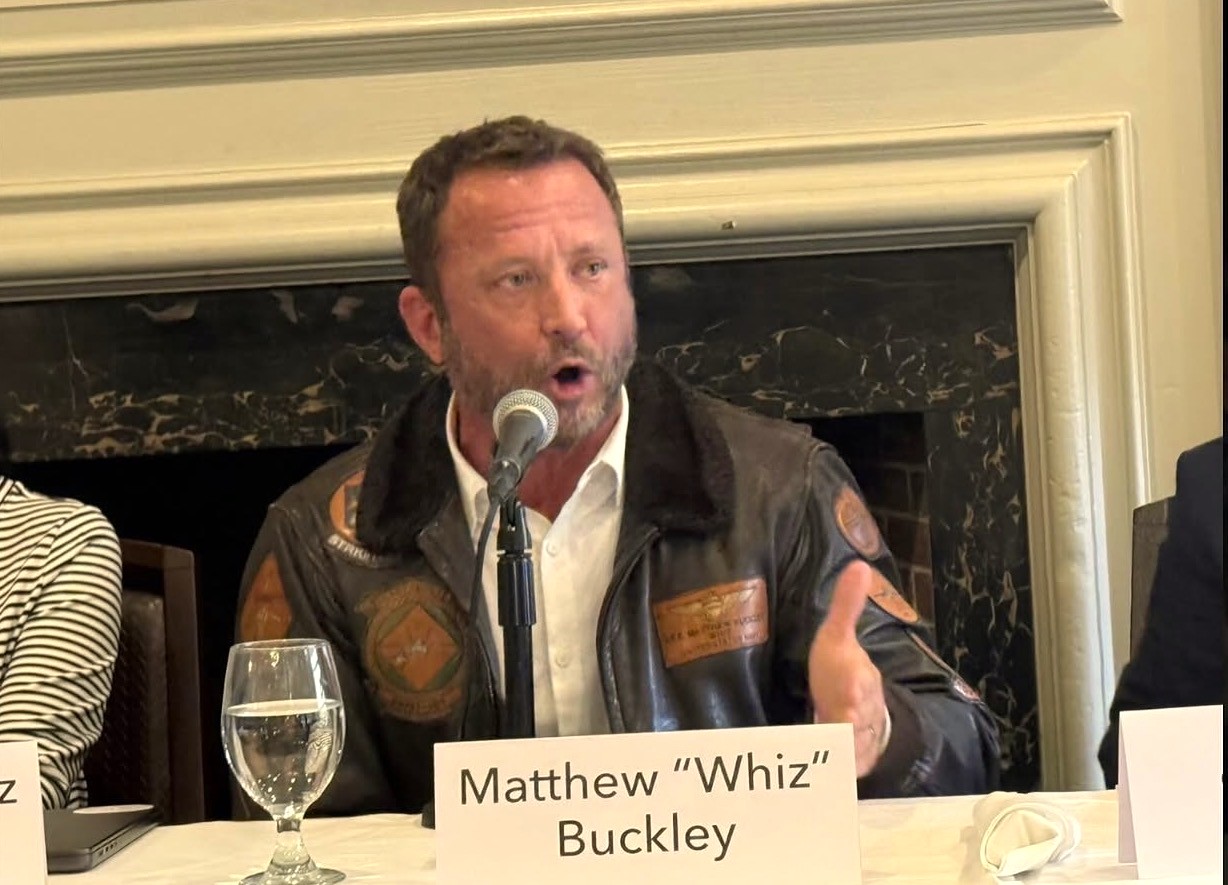
Harvard Law School
Sacred Warrior Fellowship
Then I was told to start a church.
I'm aware of how that sounds. I was aware of how it sounded while it was happening to me.
In 2025, in meditation, I got a download.
That's the word we use in this work. Years after a ceremony you are still receiving — messages that were probably handed to you at the time and are only now being uncovered, a little further along on a beautiful journey. This one came through clean. Start a church. Treat what the world calls medicine as what it has actually been for thousands of years. Sacrament.
The word church still makes my skin crawl a little. I'm a fighter pilot from South Jersey. But I stopped arguing and built it. Sacred Warrior Fellowship is a Florida 508(c)(1)(A) religious organization, and it exists because people with nowhere left to turn deserve somewhere to go.
Nothing about this asks you to share my faith. The veterans and first responders I'm fighting for are dying whether you do or not.
And it isn't only my concern. When a veteran or a first responder finds God through a sacrament and gets their life back, whether they were permitted to is a question of religious liberty. Nothing else.
I must have an old copy of the Constitution, because nowhere does it say the DEA gets to tell me how to worship my God.
I defended that document for fifteen years. I'm exercising my rights under it now.
I've made that argument at Harvard Law School — in print for the Petrie-Flom Center and on a panel with faculty from Johns Hopkins, Ohio State and Penn — and at Harvard Divinity School.
You don't have to agree with me. Two Harvard faculties thought the argument was worth hearing.
A kid from South Jersey does not picture himself standing at Harvard. Twice. I still haven't quite absorbed it.
But I didn't go to Cambridge for the credential. I went because that argument is the last thing standing between someone who has run out of options and the sacrament that gives them their life back.
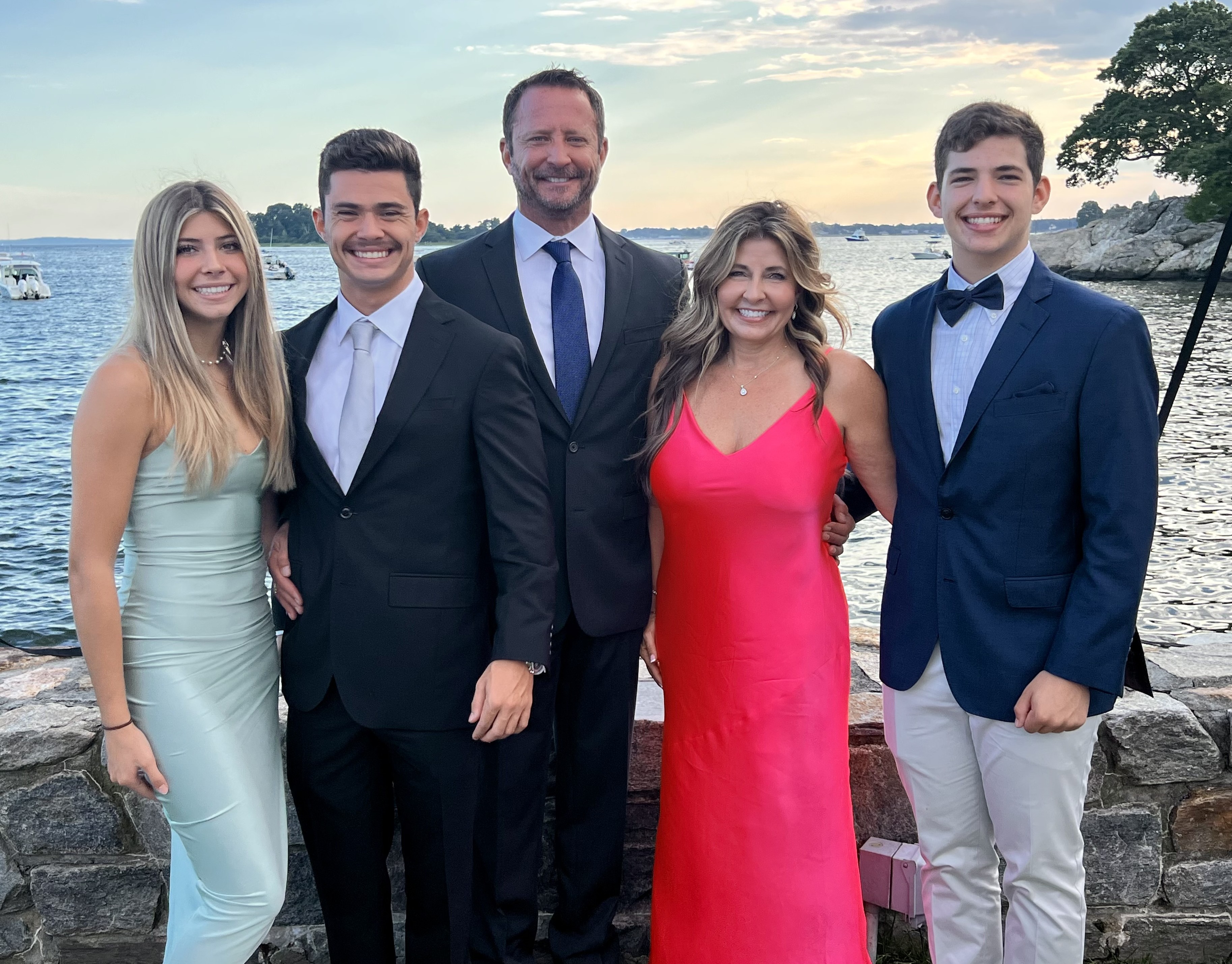
Suzi and the family
If You're Struggling
Reach me.
Veteran, first responder, spouse, parent, friend — if you're in a bad place, or someone you love is, come find me. I mean that literally, and I mean me.
[email protected]Or send me a message on any platform I'm on. I read them. I answer them. This isn't a form that routes to somebody's assistant — it's my inbox, and it has been for years.
I'm not a clinician and I won't pretend to be one. But I have been where you are. I know exactly how permanent it feels from inside, and I know that it isn't.
Healing is possible. There is a way out. I'm proof, and so are more than three hundred people No Fallen Heroes has sent to treatment.
If you need someone right now
Call or text 988 — 24/7, free, for anyone. Veterans, service members and their families, press 1.
First responders — text BADGE to 741741.
Don't wait on my inbox for this. Use these first, then write to me.
Fight's On!
What I Do With It
Now you know who I am.
And now you know who'd be standing in front of your people.
What I bring them isn't the story you just read — it's what the story taught me. How to keep executing when the plan falls apart. How to find gratitude inside the suffering instead of years after it. How to lead people who are carrying things you will never see on a performance review.
That's what PACED is. Plan, adjust, communicate, execute, debrief — forged in fighter squadrons, proven in the C-suite, and paid for the hard way.
The lessons cost me forty years. Your team gets them in sixty minutes.
FOLLOW ME


